
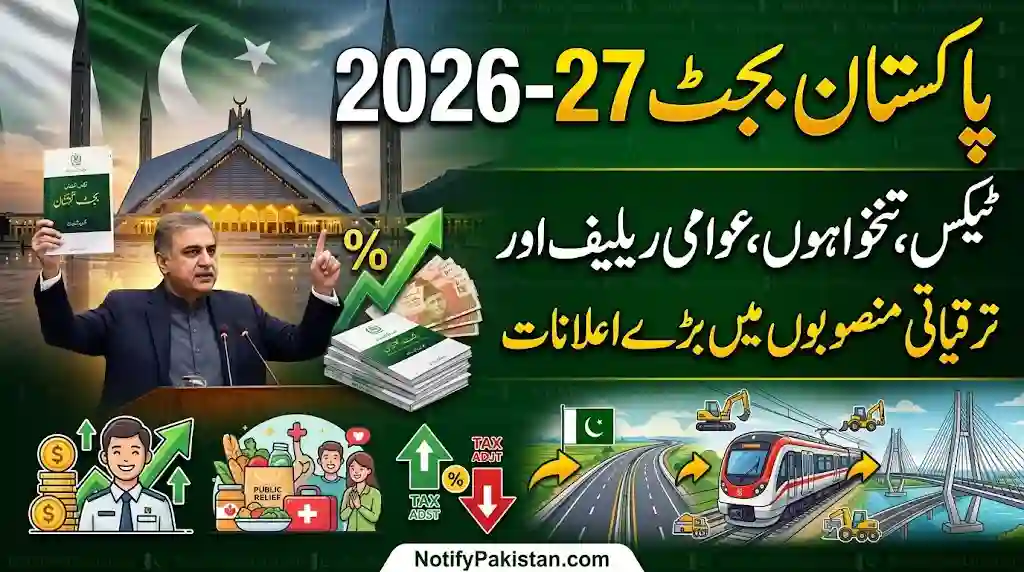
The Pakistan Budget 2026-27 has been unveiled with a strong focus on economic stability, tax reforms, public welfare, and development spending. As the country continues its efforts to strengthen economic growth while meeting fiscal targets, the federal government has introduced several important measures aimed at providing relief to citizens, supporting businesses, and attracting investment.
The new budget includes changes in income tax rates, salary and pension increases for government employees, development allocations for key sectors, and initiatives designed to improve living standards across the country. For millions of Pakistanis, the budget will directly impact their income, purchasing power, and future economic opportunities.
Overview of Pakistan Budget 2026-27
The federal government has presented a budget that aims to balance economic growth with fiscal discipline. The overall budget focuses on increasing revenue collection, reducing the fiscal deficit, supporting vulnerable communities, and accelerating development projects.
Key priorities of the budget include:
- Economic stabilization
- Tax system reforms
- Increased development spending
- Support for low-income households
- Promotion of exports and industrial growth
- Expansion of social welfare programs
- Infrastructure modernization
The government believes these measures will help strengthen Pakistan’s economy and improve investor confidence in the coming fiscal year.
Major Income Tax Changes for Salaried Individuals
One of the most significant announcements in the budget is the proposed relief for salaried employees. Rising inflation and increasing living costs have placed pressure on middle-income households, prompting the government to revise tax structures.
Reduced Tax Burden
The budget proposes adjustments in income tax slabs that could lower the tax burden on many salaried individuals. The objective is to increase disposable income and provide relief to working professionals.
Benefits include:
- Lower tax rates for certain income categories
- Reduced withholding taxes in selected areas
- Simplified tax compliance procedures
- Incentives for tax filers
These changes are expected to benefit millions of taxpayers across Pakistan.
New Measures to Expand the Tax Base
While relief has been provided to salaried individuals, the government is also introducing measures to increase revenue collection.
FBR Revenue Target
The Federal Board of Revenue (FBR) has been assigned an ambitious tax collection target for the fiscal year 2026-27. Authorities aim to improve documentation of the economy and bring more individuals and businesses into the tax net.
Key strategies include:
- Enhanced digital tax monitoring
- Stronger enforcement against tax evasion
- Increased use of technology for tax collection
- Improved integration of financial data systems
The government hopes these measures will boost revenue without placing excessive pressure on existing taxpayers.
Salary Increase for Government Employees
Government employees have received positive news in the new budget.
Revised Pay Structure
The federal government has announced salary increases for public sector employees to help offset inflationary pressures. The increase is intended to improve the financial well-being of workers while maintaining public sector efficiency.
Expected benefits include:
- Higher monthly salaries
- Improved allowances
- Better compensation packages
- Enhanced support for lower-grade employees
This move is expected to provide relief to thousands of families dependent on government employment.
Pension Increase for Retired Employees
Retired government servants are also among the beneficiaries of the budget.
Support for Pensioners
Recognizing the impact of inflation on fixed-income households, the government has announced an increase in pensions. The measure aims to help pensioners manage rising living expenses and healthcare costs.
The increase will particularly benefit senior citizens who rely heavily on pension payments for their daily needs.
Relief Measures for Low-Income Families
The budget places significant emphasis on social protection and poverty reduction.
Expansion of Welfare Programs
Several welfare initiatives are expected to receive additional funding, including cash assistance programs and support schemes for vulnerable communities.
Key objectives include:
- Reducing poverty levels
- Supporting financially struggling households
- Improving access to basic necessities
- Enhancing social safety nets
The government plans to continue supporting deserving families through targeted assistance programs.
Development Budget and Infrastructure Projects
Development spending remains a major component of Pakistan Budget 2026-27.
Infrastructure Development
Large-scale investments have been allocated for:
- National highways
- Motorways
- Urban development projects
- Public transportation systems
- Water supply infrastructure
These projects are expected to improve connectivity, boost economic activity, and create employment opportunities across the country.
Energy Sector Investments
Energy remains a critical area for development.
The government plans to invest in:
- Power generation projects
- Renewable energy initiatives
- Transmission network improvements
- Energy efficiency programs
These investments aim to reduce power shortages and support industrial growth.
Education Sector Allocations
Education continues to be a key focus area in the federal budget.
Improving Educational Opportunities
Budget allocations are expected to support:
- Construction of schools and colleges
- Teacher training programs
- Digital learning initiatives
- Higher education scholarships
- Research and innovation projects
The government aims to improve educational outcomes and prepare young people for future employment opportunities.
Healthcare Sector Improvements
Healthcare funding has also received attention in the new budget.
Strengthening Public Health Services
Major priorities include:
- Upgrading public hospitals
- Expanding healthcare facilities
- Improving medical equipment availability
- Supporting disease prevention programs
- Enhancing healthcare access in rural areas
These initiatives are expected to improve healthcare services for millions of Pakistanis.
Defense Spending and National Security
Defense remains an important component of the federal budget.
Increased Security Allocations
The government has allocated additional resources for defense and national security to address regional challenges and maintain military preparedness.
The increased allocation will support:
- Operational readiness
- Equipment modernization
- Border security
- Strategic defense initiatives
Officials believe these investments are necessary to ensure national stability and security.
Economic Growth Targets for FY 2026-27
The government has outlined ambitious economic objectives for the upcoming fiscal year.
Growth and Stability Goals
Key economic targets include:
- Higher GDP growth
- Reduced inflation
- Lower fiscal deficit
- Increased exports
- Improved foreign investment
Achieving these targets will require effective implementation of budget measures and continued economic reforms.
Job Creation and Investment Promotion
Employment generation remains a top priority.
Supporting Businesses and Industries
The budget includes measures designed to encourage investment and stimulate economic activity.
These initiatives include:
- Incentives for industrial expansion
- Support for small and medium enterprises (SMEs)
- Promotion of export-oriented industries
- Encouragement of foreign direct investment
The government hopes these measures will create new jobs and strengthen Pakistan’s industrial sector.
IMF Commitments and Fiscal Reforms
The budget has been prepared while considering commitments made under international financial arrangements.
Fiscal Responsibility Measures
To maintain economic stability, the government has introduced reforms aimed at:
- Increasing tax revenue
- Reducing unnecessary expenditures
- Improving financial transparency
- Enhancing public sector efficiency
These measures are intended to strengthen confidence among international investors and financial institutions.
Impact on Citizens and Businesses
The Pakistan Budget 2026-27 is expected to have mixed effects across different sectors of society.
Positive Outcomes
Potential benefits include:
- Tax relief for salaried individuals
- Higher salaries and pensions
- Increased development spending
- More employment opportunities
- Improved public services
Challenges
Some challenges may include:
- Additional taxation in selected sectors
- Revenue collection pressures
- Inflation management concerns
- Fiscal deficit reduction requirements
The success of the budget will largely depend on effective implementation and economic conditions throughout the fiscal year.
Future Outlook
Economic experts believe the budget represents an effort to balance growth, stability, and social welfare. Development projects, tax reforms, and welfare initiatives could contribute positively to economic performance if implemented efficiently.
At the same time, continued fiscal discipline and revenue generation will remain critical to maintaining economic stability and meeting national development goals.
Conclusion
Pakistan Budget 2026-27 introduces several important changes that will affect taxpayers, government employees, businesses, investors, and low-income families. From tax relief for salaried individuals and salary increases for public sector workers to major development spending on infrastructure, education, healthcare, and energy, the budget aims to support economic growth while addressing public needs.
Although challenges remain, the government’s focus on fiscal reforms, investment promotion, and social welfare reflects an effort to strengthen Pakistan’s economic foundation. The coming months will determine how effectively these measures translate into real benefits for citizens and contribute to long-term economic progress.